

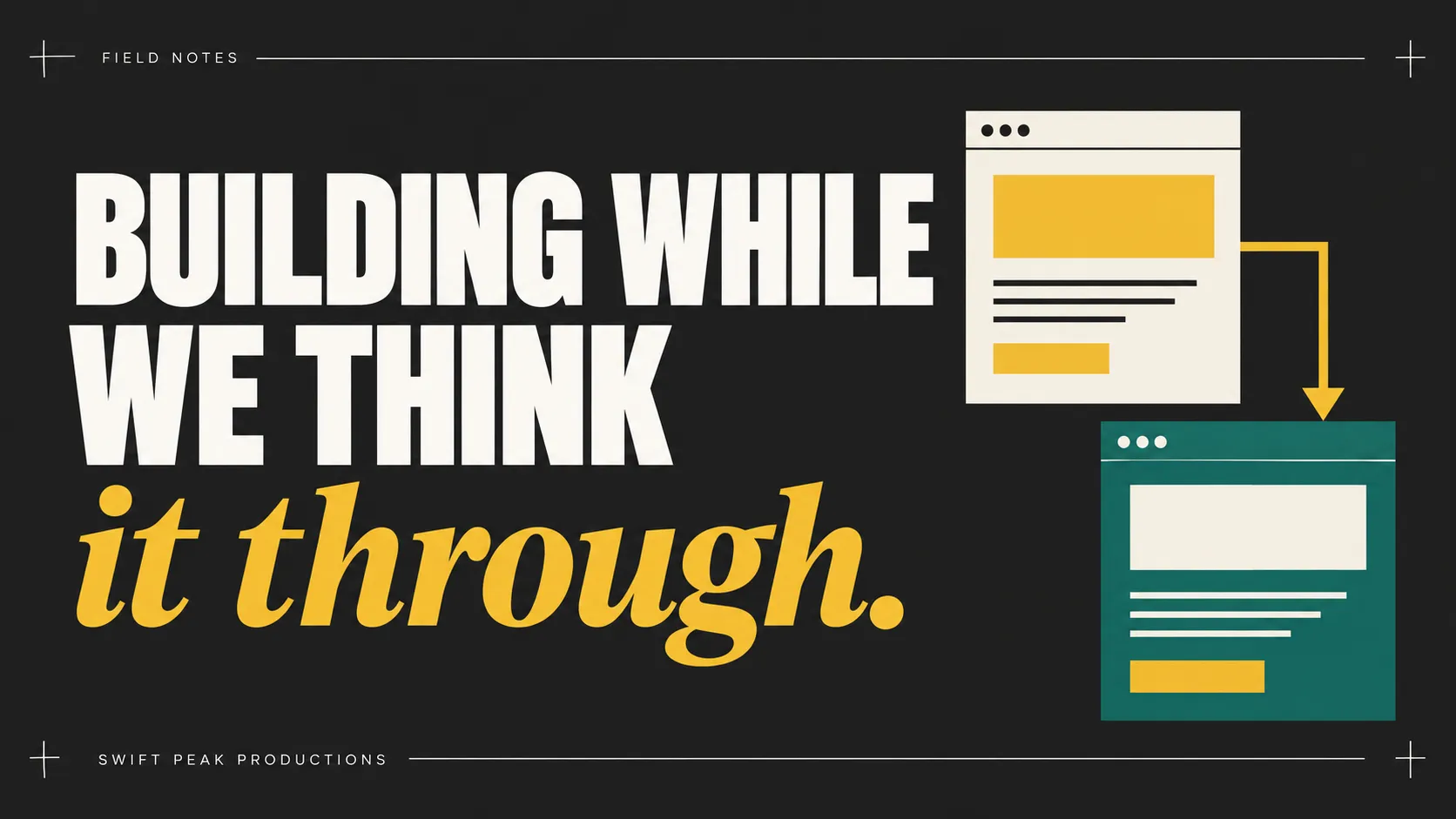
I’ve been working on a new tour-booking funnel for Renaissance Academie, a beauty school and one of my clients. The goal is to help more prospective students visit the school, with the hope that more of those visits lead to enrollment.
There’s a lot tucked inside that assignment. You need to decide what the page should say, gather the photos and video, build the page, connect the form, and figure out the follow-up. Then you have to check that those pieces aren’t sending people duplicate messages or leaving them wondering what happens next.
I find this work rewarding, but it can also be tedious and time-consuming. For a small team, knowing which questions to ask can be a challenge before anyone even starts building.
On this project, I’ve been using cloud agents to help with the build while we worked through those questions. We could keep thinking about the goals and the student experience while an agent worked on a version of the page. That gave us something to look at and respond to as we went.
Give each step a job
For RACE, the first part of the flow takes someone from an ad toward booking a tour. The page introduces the cosmetology, hair design, and master aesthetics programs, includes a testimonial video, and gives them a way to schedule a visit.
That gives the page a clear purpose. We want to help someone decide whether they’d like to see the school without asking them to work through the entire enrollment process first.
After someone books, the second step focuses on FAFSA information. Since the goal is an in-person tour, we wanted to give prospective students that important information first and leave other details for follow-up messages. The hope is that they arrive with more of their questions answered and a clearer sense of whether they want to attend.
Following that path brings up the less visible work, too. The team needs to know where the inquiry came from. Reminders need to match the tour someone booked. The information on each page needs to make sense alongside the messages that follow.
My filmmaking background shows up here. In an edit, the order of information matters. What does someone need to understand now, and what can wait until the next moment? We’re asking that question across the whole experience.
Build alongside the conversation
With a version of the page in front of us, the questions became more specific. Is the booking option easy to find? Does the video help here? Is this information useful before the tour, or does it belong later?
We had initially planned three steps, but reviewing the flow helped us narrow it to two. We cleaned up the calls to action and simplified what the second page needed to do. I could delegate those changes to the build while staying involved in the decisions. Having something concrete to review helped keep the conversation connected to what we were making.
That’s why context matters so much. Asking AI to “build a funnel” leaves a lot for it to guess. Explaining who it’s for, what they may be trying to figure out, what we’re asking them to do, and how the team will follow up gives it a more useful starting point.
This is part of what I bring to a small team: helping connect those decisions so we can execute together. We still need to see how people use the RACE flow. For now, I’m sharing the work as it takes shape.
Try it on something you’re building
You can start a similar conversation with your dot, Grokbot, or another AI assistant. What it can actually build depends on its tools and access. Give it a real example, then try this:
Help me think through and draft a better path for [audience] to [goal].
Here’s how it works now: [where people find us, what they see, what we ask them to do, and what happens afterward]. They may need help with [questions or concerns]. Our constraints are [time, budget, tools, or team capacity].
Ask me up to three questions about important missing context. Then suggest a simple path, explain the job of each step, and identify gaps in the follow-up.
Help me choose one small part to draft first. If suitable tools and agents are available, separate planning, building the draft, and reviewing it. Otherwise, guide me through those stages here.
Keep assumptions visible. Check the draft against our goal. Don’t invent customer insights or results. Ask for approval before publishing, sending messages, spending money, or changing anything live.
If you try it, reply and tell me what you’re building and where you’re getting stuck.